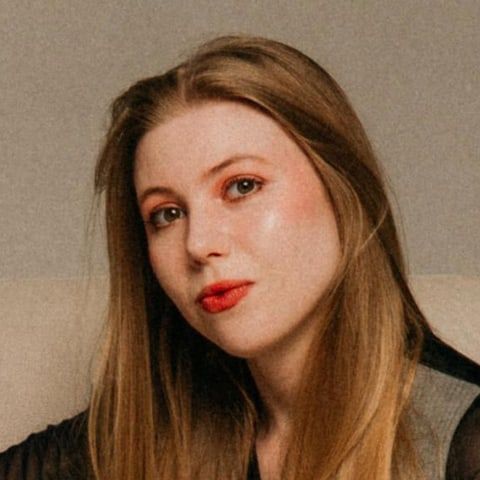
Sofia Nychkalo, MD
Editor
Founder of The Commissure.
- Education
- MD, Lviv National Medical University (opens in a new tab), Ukraine
BA in International Journalism, Ivan Franko National University of Lviv (opens in a new tab), Ukraine - Residency
- 2 years, Military Medical Clinical Center of the Western Region, Ukraine
- Internship
- 6 months in Alzheimer's research, Neurochemistry Laboratory, VUmc (opens in a new tab), Amsterdam
- Writes about
- Treatment, origins, hearing voices
- Financial ties
- None to drug or device companies. Independence
Latest from Sofia Nychkalo
Sponge or mirror: supporting a relative with psychosis
How to stay close to someone with psychosis without carrying their distress as your own.

Is schizophrenia genetic? Genes, environment and family risk
Schizophrenia runs in families, but no single gene causes it. Twin studies, the 287 DNA regions linked to it, and the role of the early-life environment.

Understanding psychosis: what the mind may be trying to say
From the outside, psychosis can look like nonsense. Up close, it may follow a logic of its own.

Caring for someone with schizophrenia without burning out
Practical steps to protect your own health while you care for someone with schizophrenia.

Beyond dopamine: glutamate, inflammation and other theories
Dopamine accounts for much of psychosis, but not for all of schizophrenia. Four other theories try to explain the rest.

Talking back to voices: what the AVATAR trials found
In AVATAR therapy, people face a digital likeness of the voice that troubles them, and practise standing up to it. What the trials show, and where it is offered.

What recovery looked like for Eleanor Longden
A psychologist who still hears voices describes how she went from wanting to drill them out of her head to living alongside them.

Making sense of voices: the Maastricht approach
How a Dutch psychiatrist's patient changed the way some clinicians work with voices, and what the evidence shows so far.

A voice is not a stranger
Questions about the approach behind AVATAR therapy, and the message it sends.

Does exercise improve mental focus in people living with schizophrenia?
In a US trial, exercise added to cognitive training improved attention. In Italy, exercise on its own did not beat usual care.

How to join a clinical trial safely
Where to look, what to ask, and what your rights are.

When the brain speaks without our permission
What brain scans show, Julian Jaynes’s bicameral mind theory, and how culture shapes the way people hear voices.

A new kind of antipsychotic: what the Cobenfy trial found
Since the 1950s, every antipsychotic has blocked dopamine receptors. Cobenfy takes a different route.

What happens inside the brain that hears voices?
Four major theories on the origin of voices, and what neuroimaging shows about each.

What is schizophrenia? Symptoms, causes and recovery
A diagnosis that describes a pattern of experiences, not a person.

Clozapine works when other medicines fail. Why is it so rarely used?
Guidelines recommend it after two other antipsychotics have not helped. Many people wait years for it, or never get it.
